Direct answer
Before custom furniture is fabricated, define whether the metal is solid sheet, veneer, plated, applied or painted; name the alloy or system; approve colour, polish, texture, grain direction and ageing effect; set an acceptable variation range; choose any sealer or coating; identify high-touch and wet zones; resolve edges, joints, fixings and substrate; and agree protection, cleaning, repair and future change. Axolotl’s September 2026 applied-metal specification guidance separates metal type, texture, ageing and surface effect. That structure is useful because “antique brass” alone does not tell a fabricator what material, sheen or degree of variation the designer intends.
Name the construction, not only the colour
A warm brass appearance can come from solid brass, brass sheet wrapped over a substrate, plated steel, a metal coating or a metallic paint. These differ in weight, edge appearance, repairability, magnetic response, fabrication method and how they age. Ask the supplier for a written build-up and a section through corners, doors and handles. Axolotl explains that its applied metal uses real metal over prepared substrates and publishes compatible substrate information. Other systems behave differently. The schedule should record manufacturer, system, metal type, substrate, thickness or build-up, finish code and approved sample reference so substitutions cannot be disguised by a similar colour name.
Approve a range, direction and viewing condition
Hand-patinated and brushed metals change with lighting and viewing angle. Metal Sheets Ltd notes that patina samples and finishes can show variation and develop over time. Review at least one larger panel in the room’s intended light, then define the acceptable light, medium and dark range. Mark brush or linish direction on drawings, especially where adjacent doors must read continuously. Decide whether edges and returns match the face or deliberately differ. Photograph the control sample under neutral light, but keep the physical signed sample because camera exposure and screens alter colour. For a large piece, request a representative fabrication panel before the full batch proceeds.
Map touch, water and abrasion zones
A console top, drawer pull, plinth and decorative side panel receive different contact. Finger oils may accelerate change; cleaning equipment can scratch low panels; flower vases and drinks create moisture risk. Mark every high-touch, wet or abrasion zone and ask whether the proposed finish is suitable. Decide where a protective coating is needed and whether the desired patina should continue evolving. Metal Sheets Ltd’s February 2026 care guide distinguishes routine cleaning from restoration and warns against unsuitable abrasive treatment. Use the exact supplier instructions, because a cleaner that suits bare stainless steel may damage lacquer, wax or a chemically patinated brass finish.
Resolve edges, joints and hardware together
Show sheet seams, folded edges, corner radii, welds, end grain, shadow gaps, fasteners and moving clearances at a practical scale. A perfect face sample does not prove a convincing corner. Where metal wraps a door or drawer, confirm hinge and runner capacity, front weight and clearance. Avoid placing dissimilar metals together without specialist review of compatibility and staining risk. If the metal is only a thin applied finish, define how exposed edges are treated and how a future chip is repaired. Integrate handles and pulls into the same sample, since drilling, polishing and repeated touch can change the appearance around them.
Planning example
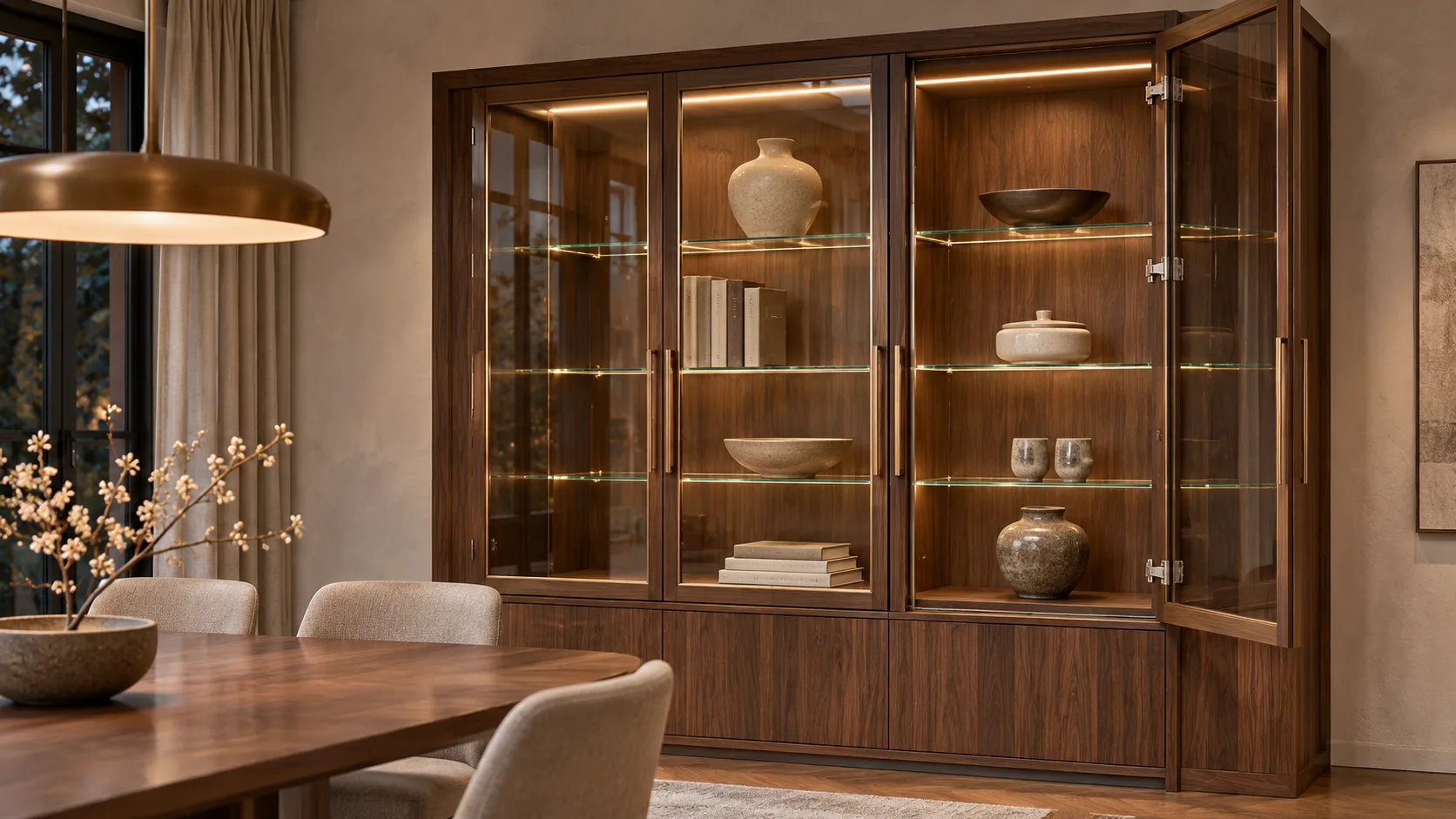
Planning example: a custom bar cabinet uses “aged brass” doors beside walnut shelves. The first sample is a small dark square, while the full-height doors arrive lighter with a visible vertical brush direction and brighter folded edges. Before batch fabrication, the team approves three larger range samples, fixes the grain direction, agrees a medium patina control, chooses a sealed high-touch pull zone and signs a corner mock-up showing the edge treatment. Natural variation remains accepted within the agreed range. This fictional scenario demonstrates specification discipline; it is not a completed project or guarantee of a particular supplier finish.
Plan protection, delivery and handover
Metal surfaces can be marked during packing, transport, installation and adjacent works. Define protective film or wrapping, removal timing, handling gloves and the person who accepts the finish on delivery. Do not leave incompatible films or tapes on a coated surface beyond the supplier’s stated period. Inspect before installation and again after surrounding work. At handover, provide the finish code, signed sample, care guide, permitted cleaner, coating information and a repair contact. If the material is intended to evolve, explain that truthfully so normal patina is not mistaken for a defect. If colour stability is critical, record the supplier’s realistic maintenance and recoating expectations.
Checklist before fabrication
Approve the material as a complete furniture detail rather than a single loose swatch.
- Identify solid, sheet, plated, applied or painted construction
- Record metal type, substrate, texture, ageing and finish code
- Approve a large control sample and acceptable variation range
- Mark brush, grain or pattern direction on elevations
- Review high-touch, wet and abrasion zones
- Resolve coating, lacquer or wax intent
- Approve corners, edges, seams, fixings and hardware
- Confirm added weight and moving-hardware compatibility
- Set protection, delivery and acceptance procedures
- Include current care and repair information at handover
Limitations and next step
This guide does not predict natural ageing, certify chemical compatibility, specify structural fixings or instruct fabrication and restoration. Metal composition, coatings and patina processes are supplier-specific. The next step is a metal-finish approval pack containing the written build-up, larger range samples, corner mock-up, direction drawings, touch-zone review and care statement. Include the room lighting condition, sample date and intended batch or production reference, then retain one protected signed control sample until delivery inspection is complete. Have the designer, fabricator and finish supplier sign the same reference before production. Where the owner expects a perfectly uniform permanent colour, compare alternative finishes honestly rather than approving a variable natural metal and later treating its normal change as failure.
Sources & further reading
Make this useful for your project.
A review of your property and priorities can turn general guidance into a defined brief.
Explore Custom furnitureDiscuss your project