Direct answer
A custom-furniture prototype review should settle whether the piece matches the approved dimensions, supports the intended activity, feels stable and comfortable, uses the agreed materials and finishes, can be maintained, can pass through the delivery route, and can be reproduced consistently. The result should be a signed benchmark with photographs, measurements, sample references and a list of closed changes. It is not enough to say the prototype looks good. Industry bodies such as BIFMA publish safety and performance standards for furniture categories; the project team should identify which standards, tests or supplier declarations are relevant to the actual use and jurisdiction rather than assuming a visual inspection proves performance.
Decide what the prototype must prove
Write the review brief before the prototype arrives. A dining chair may need to prove comfort over a meal, stability, floor protection and upholstery detailing. A console may need to prove drawer movement, wall fixing strategy and cable access. A large sofa may need to prove seat geometry, cushion recovery, modular joins and delivery separation. State whether the sample is appearance-only, functional, structurally representative or a complete first-off piece. Without that definition, one party may treat a lightweight display sample as approval for batch construction while another expects production-grade materials and hardware.
- Intended users and activities
- Prototype status and representative components
- Required evidence or applicable performance standard
- Quantity to be produced after approval
- Decisions that cannot be changed once production starts
Review scale and comfort with real users
Measure overall size and the dimensions that affect use, then test the piece in its intended spatial context. For seating, review height, depth, back support, arm position, edge pressure and the ease of standing, using more than one representative user where possible. For tables and desks, test knee space, reach and the relationship to selected chairs. Record subjective feedback separately from measured deviations. A piece can match the drawing yet feel wrong because the original brief missed a user need; the prototype is the moment to decide whether the drawing or the experience should govern the revision.
Inspect materials, joins and moving parts
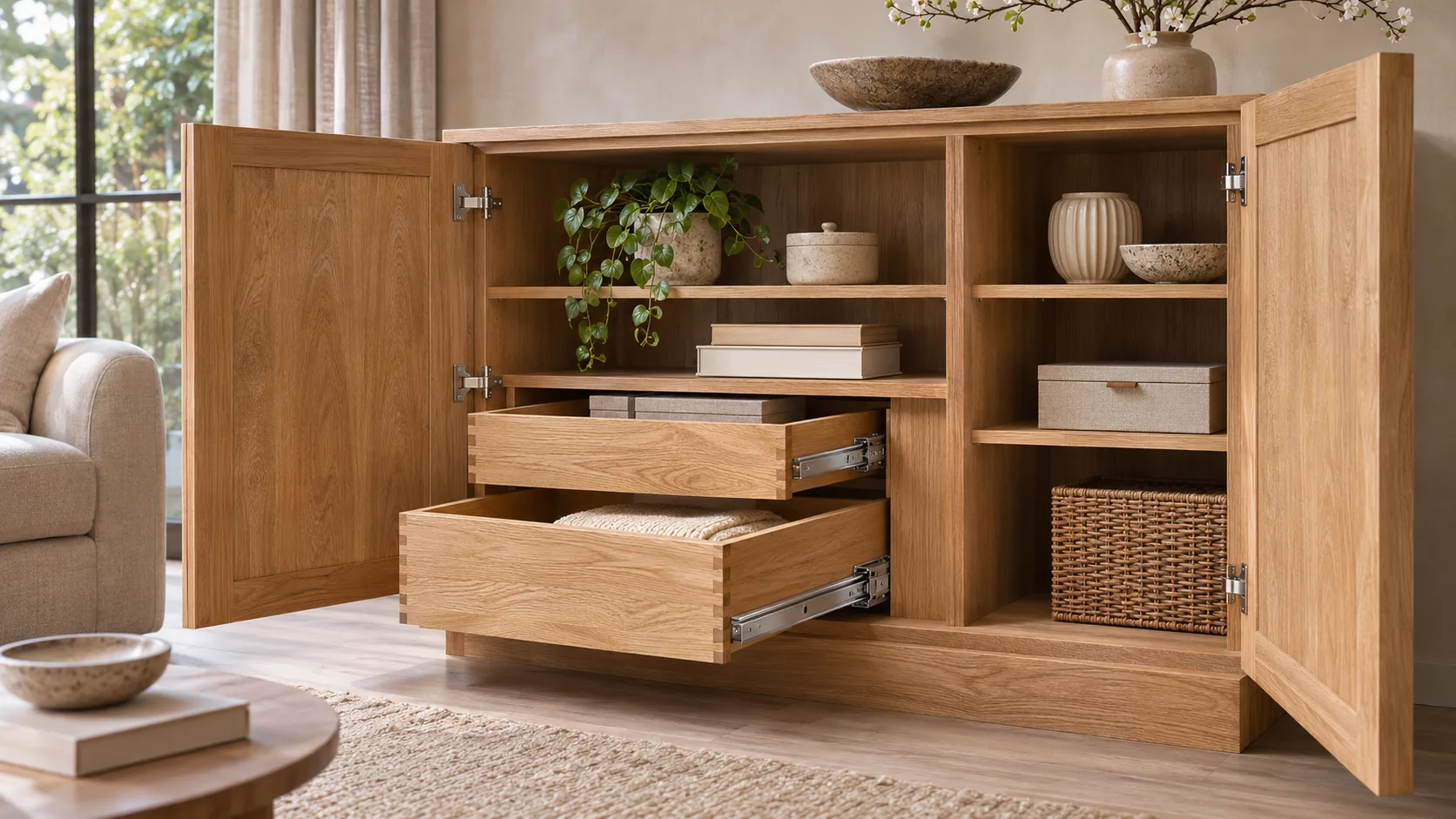
Compare every visible material with the approved control sample under neutral and project-relevant light. Review veneer direction and matching, timber tone, stone variation, metal sheen, stitching, piping, seam positions and pattern alignment. Operate drawers, doors, extension leaves, swivels or reclining parts repeatedly and listen for rubbing or impact. Look beneath the piece: underside finishing, fixings, glides and cable routes affect durability and maintenance even when they are not immediately visible. Supplier claims and test evidence should relate to the specified construction, not merely to a component used elsewhere.
- Material and finish sample references
- Join alignment and edge treatment
- Hardware model, movement and adjustment
- Upholstery tension, seam and pattern position
- Floor glides, protection and underside finish
Test care, repair and replacement assumptions
Ask how the piece will be cleaned and which products are prohibited. Herman Miller and other established manufacturers publish material-specific care guidance, illustrating why one cleaning instruction does not suit every textile, leather, coated metal or timber surface. Confirm whether covers, cushions, glides and hardware can be removed or replaced, how access is gained and whether spare material should be retained. For pieces near food, children, pets or strong sunlight, connect the maintenance plan to the actual risk. A beautiful finish that cannot tolerate expected care may be the wrong specification.
Planning example
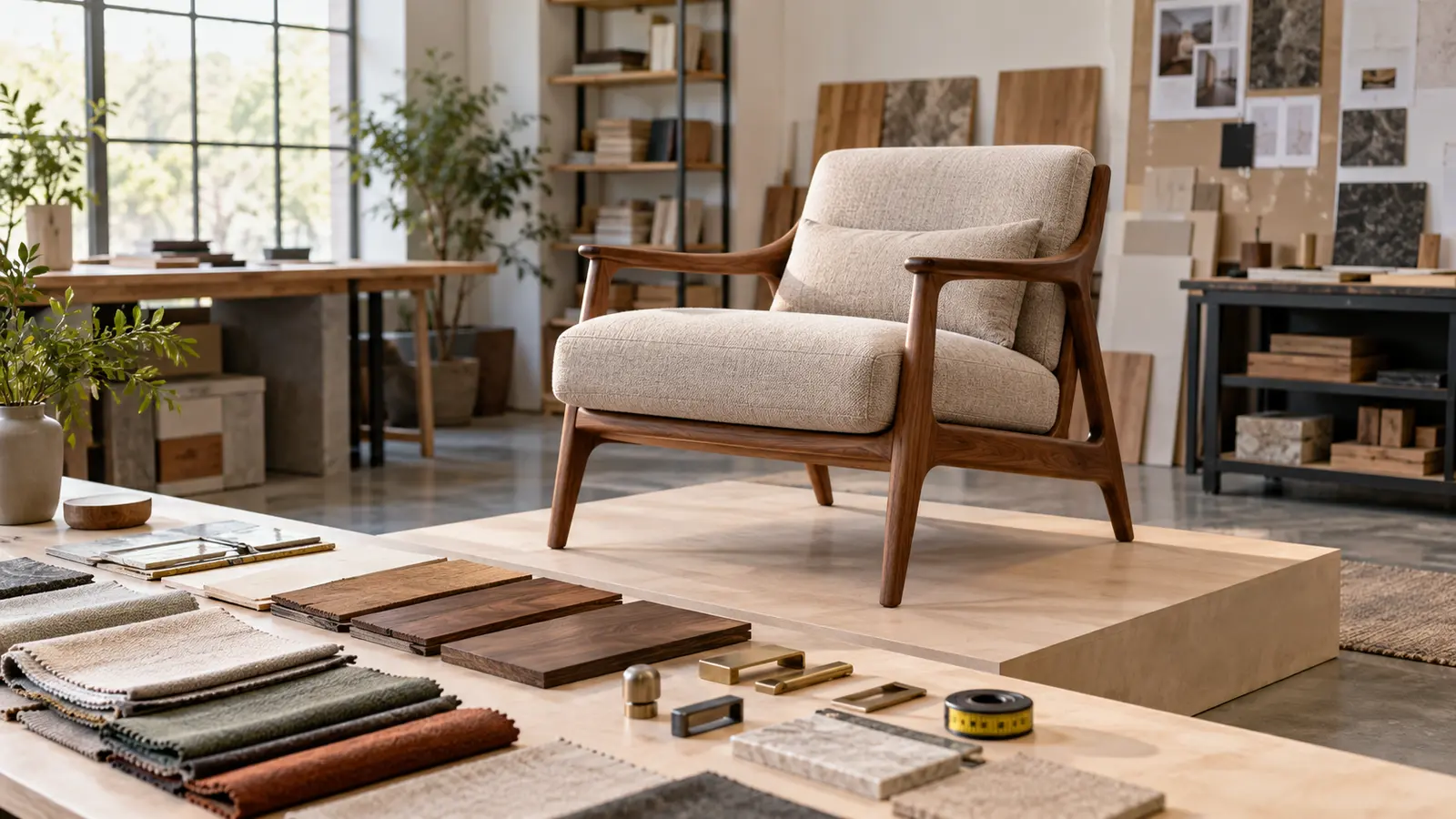
Planning example: a fictional villa requires eight matching lounge chairs for a family room. The first prototype uses the approved fabric and timber tone but reveals three issues: the front rail presses behind the knee, the swivel base is visible from normal standing height and the fabric pattern drifts across the back panel. The team revises the seat edge, adjusts the base enclosure and fixes a pattern datum. The revised drawing, fabric orientation photograph and measured prototype become the production benchmark. This example shows why a single reviewed chair protects a repeated order; it does not claim a completed project or prescribe a universal chair construction.
- Comfort feedback was tied to a specific dimension
- A concealed component was reviewed from normal viewpoints
- Pattern placement became a repeatable workshop instruction
- The revised prototype replaced the earlier benchmark
Checklist for first-off approval
Approve the piece by exception: every departure from the drawing or sample should be accepted, corrected or recorded as not applicable. Sign and date the final benchmark before the remaining quantity starts.
- Overall and use-critical dimensions are verified
- Comfort and reach are tested by representative users
- Stability and relevant performance evidence are reviewed
- Materials and finishes match labelled control samples
- Joins, seams, hardware and moving parts are consistent
- Cleaning, repair and spare-material requirements are agreed
- Delivery separation and reassembly are understood
- All approved changes appear in the production information
Limitations and next step
A prototype review is not a substitute for engineering, accredited testing or statutory product compliance where those are required. BIFMA and other standards are category- and market-specific, so the responsible supplier and designer must establish what applies. Natural materials will also vary within agreed limits. The next step is to issue a one-page prototype review sheet before the first-off inspection. Attach the latest drawing, finish schedule and intended-use brief, then photograph and label the approved piece so workshop production, delivery inspection and future replacements share the same benchmark.
Sources & further reading
Make this useful for your project.
A review of your property and priorities can turn general guidance into a defined brief.
Explore Custom furnitureDiscuss your project