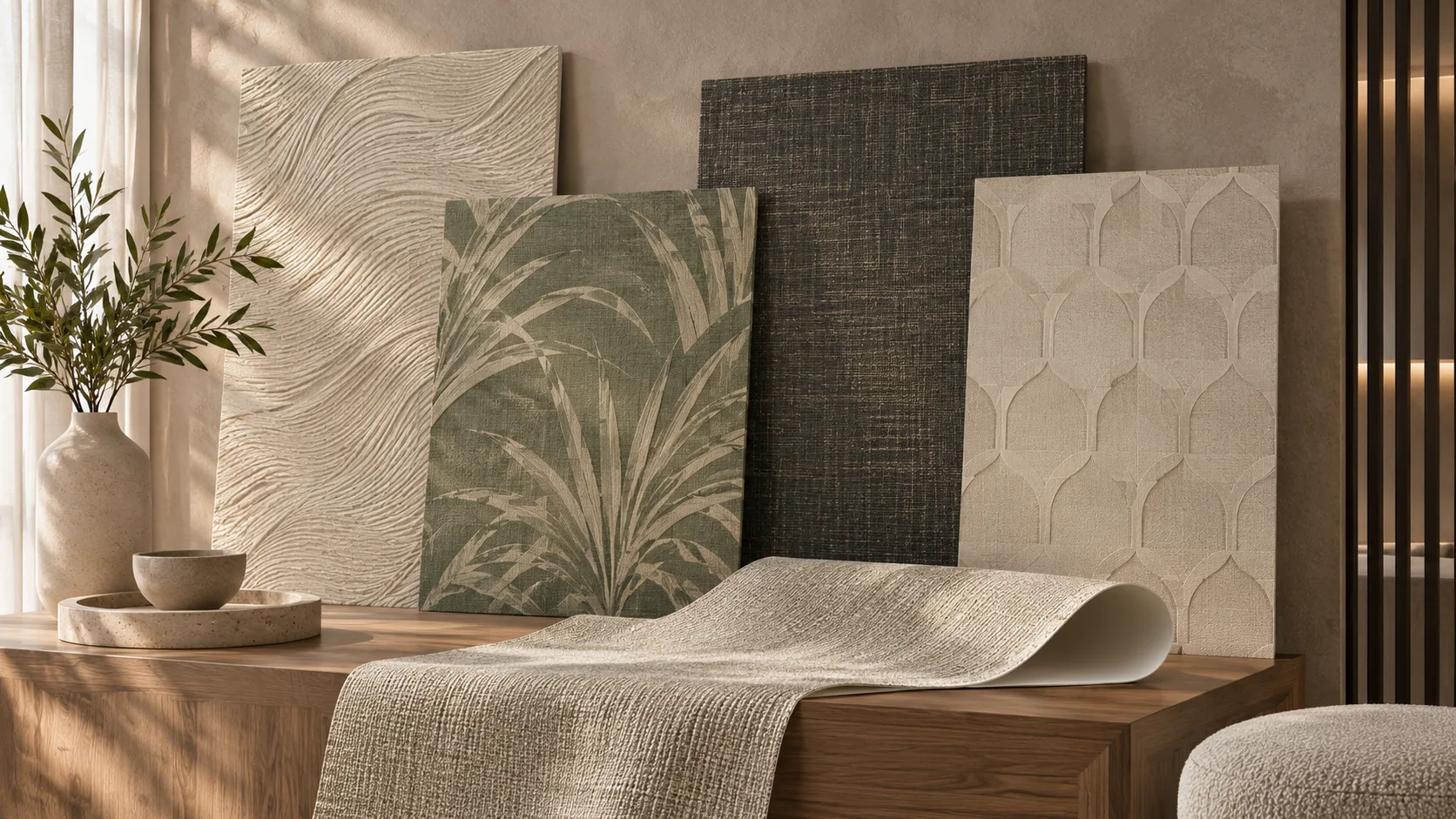
Compare relationships
Review wall, floor, joinery, upholstery and metal finishes as a set. Look at their proportions as well as their colours: a small dark detail has a different effect from a whole wall. Add existing furniture and artwork to the conversation. The objective is a coherent relationship, not necessarily a perfect match between every surface.
Move beyond a single sample
Consider texture, sheen, pattern repeat and natural variation. Ask the supplier what a larger installation or a different batch may look like. Where the project warrants it, a larger sample or mock-up can answer questions that a small swatch cannot. Record the approved reference and the limits of what the sample represents.
Keep the care routine visible
A material that looks appealing may require a level of care the household does not want. Discuss cleaning, repair and replaceable elements before purchase. Product suitability should be confirmed for the intended application. A strong palette connects visual intent with the way the room will be used and maintained.
A planning scenario
A fictional living-room scheme combines textured plaster, timber and a patterned textile. The team reviews them beside the client’s retained artwork and under an evening lighting sample. One finish is adjusted because its sheen competes with the art. The example illustrates a review method without claiming a completed installation.
A useful review checklist
Use these prompts to turn the discussion into a record that can be compared with drawings, supplier information and the project scope. Mark what is confirmed, who needs to respond and when the decision is required.
- View adjoining materials as a set
- Consider their proportion in the room
- Review texture and batch variation
- Include retained furniture and art
- Record care needs and final references
Observe the room before choosing the setting
Look at the space at the times it is used and note where daylight and artificial lighting differ. Review samples in those relevant conditions rather than relying only on a showroom or phone screen. A photograph can help keep a record, but its colour is not a precise substitute for the physical sample. Explain which setting matters most so the design team can assess the palette against the household's actual use.
Compare adjacent materials together
Place wall, floor, joinery and upholstery samples beside the finishes they will meet. Similar colours can reveal different undertones, while texture can change the amount of visible contrast. Move from individual favourites to combinations that make sense together. Include handles and other repeated small details when they materially affect the scheme. The objective is a considered relationship between materials, not a separate approval process in which each item is selected without its neighbours.
Review large surfaces with appropriate evidence
For a prominent wall, cabinet or natural surface, ask what larger sample or material review would give a reliable understanding of the result. Discuss variation, seams and the intended direction of patterned or grained materials. Do not assume a small swatch describes a whole installation. Record the limits of the sample approval and link the final selection to the applicable drawings and product references before procurement depends on it.
Keep a usable selection history
Label approved samples and record the location where each finish will be used. Distinguish a preferred option from a purchased product and note substitutions when they occur. Keep the care information connected to the final selection, particularly when visually similar products require different treatment. If a material is reviewed again after a lighting change, record that decision too. The palette should remain a practical project document as well as a visual direction.
Carry the decision through to delivery
Keep the accepted decision with the current scope and drawings. If a product, layout or responsibility changes, record the effect on the other work before purchasing or proceeding. At completion, retain the relevant operating and care information with the project record. The next conversation is more useful when the unresolved questions are visible.
Sources & further reading
Make this useful for your project.
A review of your property and priorities can turn general guidance into a defined brief.
Explore Modern interior designDiscuss your project