Direct answer
An upholstery-performance brief should define who will use the furniture, how often, in which room and under what light, spill and cleaning conditions before a textile is approved. For each item, record fabric composition, colour, texture, width, directional character, abrasion and pilling information, light exposure considerations, cleaning method, relevant fire or contract requirement, seam and piping intent, pattern repeat and approved sample. Connect those facts to the furniture form, cushion construction and quantity. The brief should help the client compare realistic use and appearance rather than choosing from a small swatch by colour alone.
Map real use before comparing test results
Start with the household or hospitality pattern. Identify daily family seating, occasional formal chairs, dining pieces, children's use, pets, direct sun, food and drink exposure, and whether covers are fixed or removable. Test results become useful only when read against this context. Abrasion resistance describes wear from rubbing, but it does not by itself predict staining, fading, snagging, seam failure or how a fabric drapes over a curved form. Ask the supplier to explain the relevant test method and the intended application of the specific textile.
Review texture at furniture scale
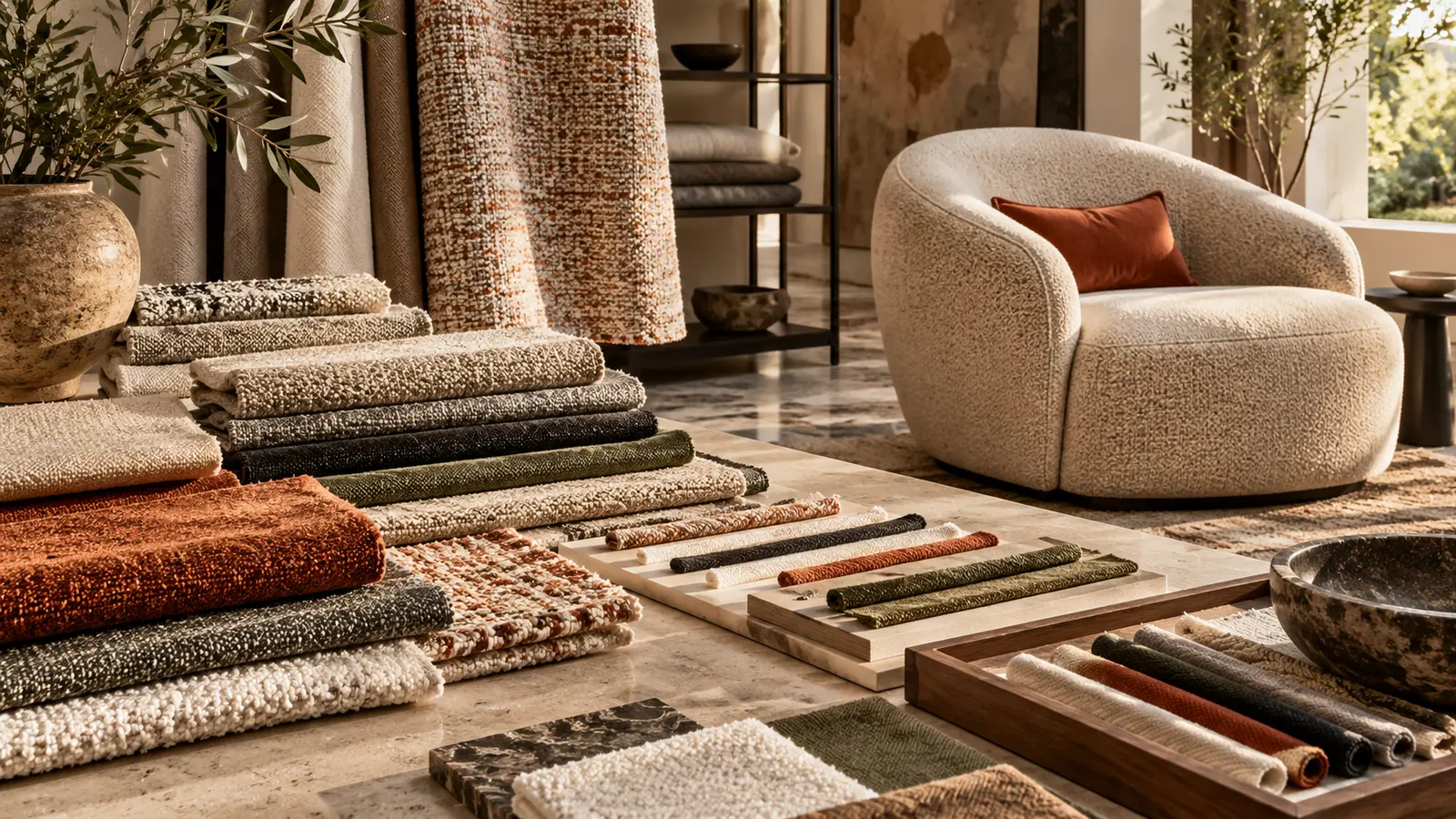
A hand sample is useful for colour and touch but too small to show the full repeat, directional pile or how light moves across the surface. Request a larger sample and view it vertically and horizontally in the intended room. For a curved chair or deep sofa, review how the textile behaves at seams, corners and cushion edges. Decide pile direction, top and bottom, pattern matching, piping and visible seam positions before cutting. On adjacent pieces, state whether colour variation is acceptable and whether all yardage should come from a coordinated production batch.
Plan cleaning and sunlight together
A fabric that suits normal indoor seating may behave differently beside strong glazing or under frequent spot cleaning. Record window exposure, expected shading and the approved care method. Regular dust removal can matter because embedded dirt contributes to wear, while unsuitable cleaning may alter colour or texture. If professional cleaning is expected, say so at purchase rather than after a spill. Where a removable cover is proposed, confirm shrinkage, fastening and refitting expectations with the maker. Lightfastness information should be considered with actual daylight and window-treatment use, not treated as a promise against all fading.
Planning example
Planning example: A villa interior includes a family-room sectional, two formal lounge chairs and a sunny breakfast banquette. The first palette uses one pale bouclé throughout. The performance brief records heavy daily use and frequent snacks at the sectional, occasional use for the chairs and strong morning light plus dining spills at the banquette. The designer keeps a related colour family but tests three textile types against their actual conditions. Large samples are reviewed in the rooms, seam details are mocked up and care guidance is confirmed before ordering. This is a planning scenario, not a completed project or a textile guarantee.
Upholstery approval checklist
Before the furniture order is released, confirm:
- Each furniture item has a use, occupancy, spill, pet and daylight profile.
- Composition, colour, width, repeat, pile direction and quantity assumptions are recorded.
- Abrasion, pilling, light and other relevant test information uses identified methods.
- The maker has reviewed stretch, drape, seam, piping and cushion compatibility.
- Large samples are assessed in the intended room under daytime and evening light.
- Pattern matching, seam positions and direction are shown for important visible faces.
- Care instructions are realistic for the client and any professional cleaning requirement is clear.
- Substitutions, batch changes and shortages require approval against the retained reference sample.
Limitations and product verification
Textile test results describe controlled conditions and do not guarantee appearance or service life in every home. Performance also depends on furniture design, padding, support, cutting, sewing, installation, cleaning and actual use. Fire and contract requirements vary by project and should be confirmed by the relevant qualified parties. Natural fibres and textured fabrics may show expected variation. Suppliers can change ranges or dye lots, so verify current technical data and retain an approved sample from the ordered production batch where practical.
A useful next step
Create a one-page upholstery schedule that pairs every custom item with its use category, textile reference, colour, performance evidence, care method and sample approval. Take the short-listed textiles into the actual rooms, then review one representative seam or upholstered detail with the furniture maker. This gives procurement a clear basis for approval and makes any later substitution visible before cutting begins.
Sources & further reading
Make this useful for your project.
A review of your property and priorities can turn general guidance into a defined brief.
Explore Custom furnitureDiscuss your project